Ken Nelson was born in Wetaskiwin, Alberta — a small city ninety minutes south of Edmonton where the wind comes hard off the prairie and there isn't a lake for miles worth mentioning. He started waterskiing at fifteen. A fairly timid kid, by his own account. Not the kind of person you'd bet would change a sport.
But the water had other plans.
By 1973, Ken was competing at his first Canadian National Championships. He won bronze in slalom. By the end of the decade, he was a national gold medallist. And he wasn't just winning — he was thinking. He was the first person to use cylinders as boat guides in the slalom course, a change so obviously right that it became an official rule. He designed a portable slalom course with brace lines. He built a ski jump that was approved by the International Water Ski Federation at their 1993 congress.
But the thing that defined Ken Nelson wasn't a medal or an invention. It was a decision.
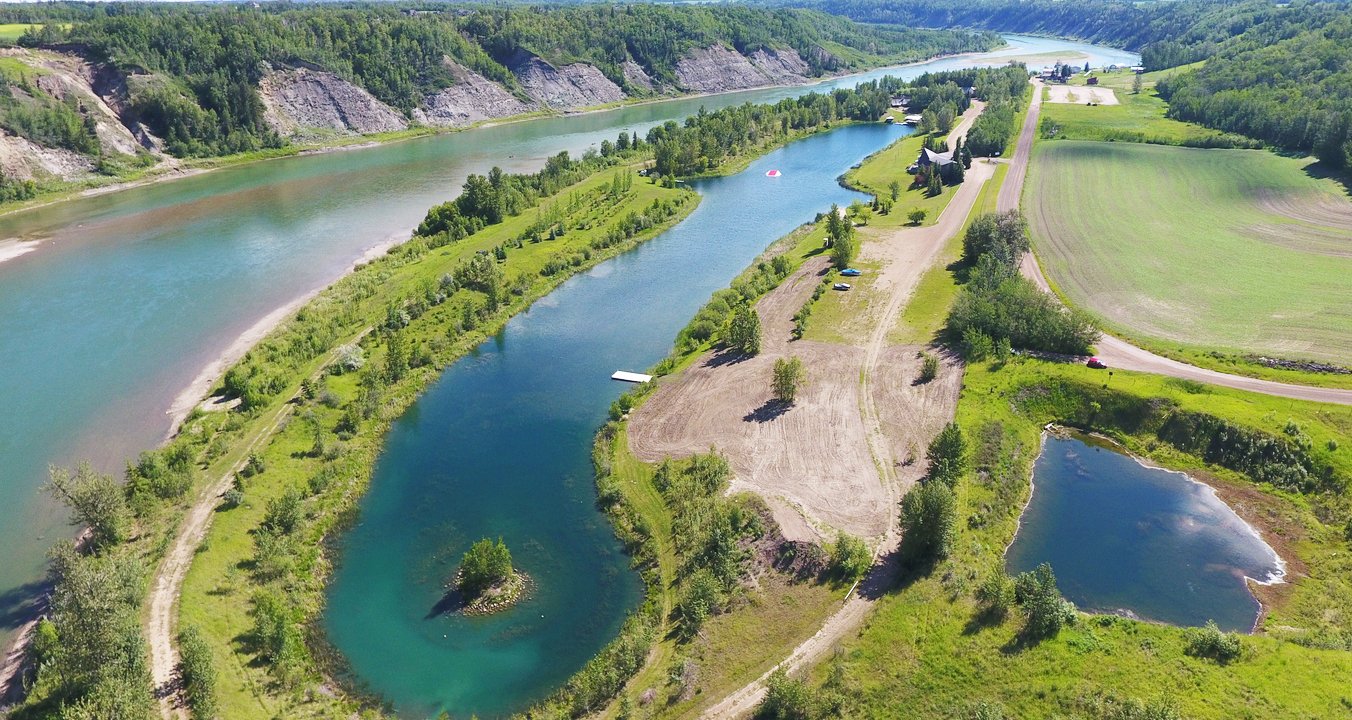
In 1985, he looked at 42 acres of Alberta prairie along the North Saskatchewan River valley — land that most people would see as flat, treeless, and unremarkable — and he saw a world-class waterski lake. A 2,100-foot course. A tournament center. A facility that would host World Championships.
He was right.